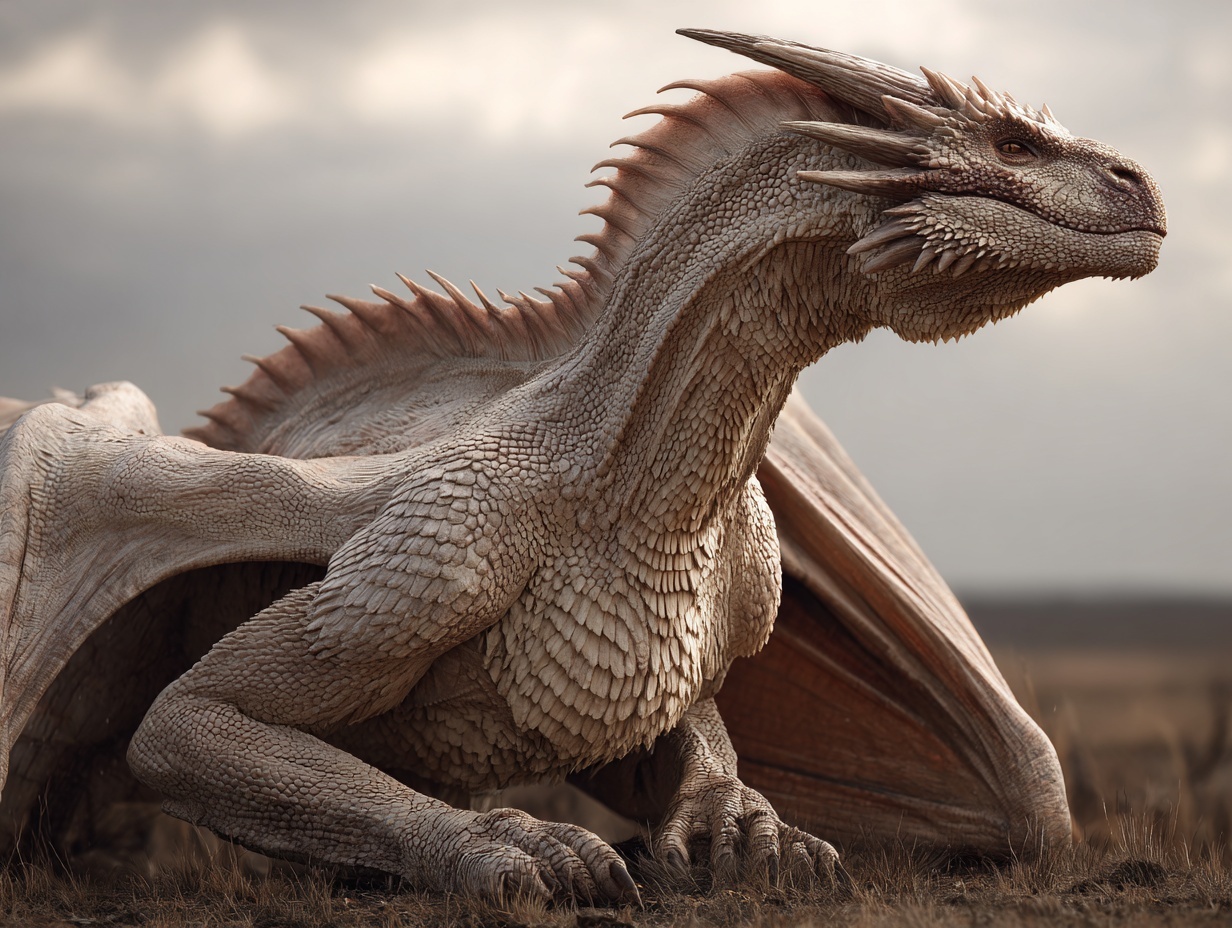
There is no photograph of a living T. rex, because nobody was there with a camera. The real dinosaur pictures that exist are photos of fossils, photos of skeletons in museums, a few astonishing pictures of fossilised skin and feathers, and photos of birds, which scientists count as living dinosaurs.
That is a bit of a letdown if you typed “real dinosaur pictures” hoping for a snap of a Triceratops at a watering hole. It is also more interesting than it sounds. Here is what each kind of real picture shows, how to tell a photo from a painting, and what the dinosaur pictures on this site are.
What counts as a real dinosaur picture?
Four things. First, fossils: bones and teeth turned to stone, photographed as they came out of the ground. Second, skeleton mounts: fossils (or casts of them) assembled in a museum hall. Third, the rare cases where more than bone survived: skin, armour, feathers. And fourth, living dinosaurs, which is a surprise worth a section of its own below.
Everything else is art. Good art, often built from real evidence, but art. That includes the illustrations in books and documentaries, the movie monsters, and the pictures of living dinosaurs on this site.
Real pictures of dinosaur fossils and skeletons
Fossil photos look like what they are: grey and brown bone in rock. Skeleton mounts are the ones you know from museum halls. The Natural History Museum in London used to show a famous one, a cast of a Diplodocus nicknamed Dippy. The museum says it came from a donation by Andrew Carnegie in 1905, stood in Hintze Hall from 1979 to early 2017, and is now on long-term loan to the Herbert Art Gallery and Museum in Coventry. A cast is a copy of the real bones, which is worth knowing when you look at a skeleton photo. Our dinosaur size comparison shows how Diplodocus stacks up against everything else, about 26 m long on the museum’s figures.
The skeleton you see may be real bone, a cast, or a mix, and a good museum label tells you which. If a caption does not say, assume nothing.
Real dinosaur pictures with skin, armour and feathers
Bone is the usual outcome. Skin is much rarer. The Royal Tyrrell Museum in Alberta, Canada, calls its Borealopelta the best-preserved armoured dinosaur in the world, and says workers found it at a mine north of Fort McMurray in 2011. The museum shows it in its Breakthroughs gallery. A photo of that fossil looks less like a skeleton and more like an animal.
Feathers are the other big one. The Natural History Museum says the first Archaeopteryx fossil was a single feather found in Germany in 1861, which “caused a lot of confusion”, and whether that feather even belongs to Archaeopteryx has been debated since. Many later specimens show clear long feathers, the museum says. It was about 0.5 m long, roughly magpie-sized, from 149 to 145 million years ago. The museum notes that it was once called an ancient bird, and that many people now think it should be called a dinosaur. Our Archaeopteryx guide and dinosaur feathers explainer go further.
Real photos of living dinosaurs
Here is a surprise. Go outside and look at a pigeon. The Natural History Museum says birds evolved from a group of meat-eating dinosaurs called theropods, the same group T. rex belonged to, and that when most dinosaurs went extinct, only birds remained. There are at least 11,000 bird species alive today.
So a photo of a robin is, in the scientific sense, a real picture of a living dinosaur. It does not roar. It does, if you squint at the feet and the feathers, look related. Our guide to dinosaurs that still exist today has more.
How to tell a real photo from dinosaur art
A few quick checks. Real fossil photos show bone and rock, usually in a museum or a dig. A picture of a whole living animal with skin, colour and a landscape is a reconstruction, which means someone drew it from the evidence. Treat colour as the artist’s choice unless a caption says there is evidence for it. Microraptor is a case with evidence: the museum says researchers learned that it likely had shiny black feathers. If a site shows a clean, dramatic dinosaur and never says “illustration”, be suspicious.
Reconstructions also get revised. The same museum says Velociraptor is now thought to have had a fine feather-like covering, and that the Jurassic Park films recreated it at about twice its real size. So a bare-skinned raptor at twice the real length is out of date on two counts. Science keeps correcting its pictures. See our Velociraptor guide for the current picture.
About the dinosaur pictures on this site
The pictures of living dinosaurs on Real Dinosaur Pictures are reconstructions, not photographs, and no photograph of these animals exists. Artistic details may not match the fossils. Browse the dinosaur names and pictures guide for the full set, and use the types of dinosaurs guide to sort the famous ones.
Real dinosaur pictures: questions people ask
Is there a real photo of a dinosaur? Not of a living non-bird dinosaur. There are real photos of fossils, skeletons, rare preserved skin and feathers, and living birds.
Are birds really dinosaurs? Yes, in the scientific sense. The Natural History Museum says birds evolved from small meat-eating theropod dinosaurs and were the only dinosaurs to survive the mass extinction.
Are the pictures of living dinosaurs on this site real? No. They are reconstructions: nobody has ever photographed a living non-bird dinosaur.
Sources, checked 31 October 2026: the Royal Tyrrell Museum, and the Natural History Museum pages on birds as surviving dinosaurs, Archaeopteryx and Diplodocus.