Looking for Tyrannosaurus rex pictures? This page has six illustrations, quick facts and a fictional adventure starring Max, a kid whose photo mission ends with a dive into a ravine. The dinosaur facts sit alongside the story. The time travel is Max’s department.
Short version: the pictures are right below, the facts are in the table, and the story is further down if you want it. Start with the King himself.
Tyrannosaurus Rex: Quick Facts
| Name meaning | Tyrannosaurus Rex = “Tyrant Lizard King.” Very appropriate. |
| Time period | Late Cretaceous, about 68–66 million years ago. |
| Size | Up to 40 feet long, 13 feet tall at the hips, and weighing about 9 tons. That’s like stacking three elephants. |
| Diet | Carnivore. If it moved, the T-Rex probably ate it. |
| Habitat | Mostly North America—think Montana, but way more tropical. |
Here’s what I’ve learned about the King of Dinosaurs during my trips:
The Pictures: Six Views of the King
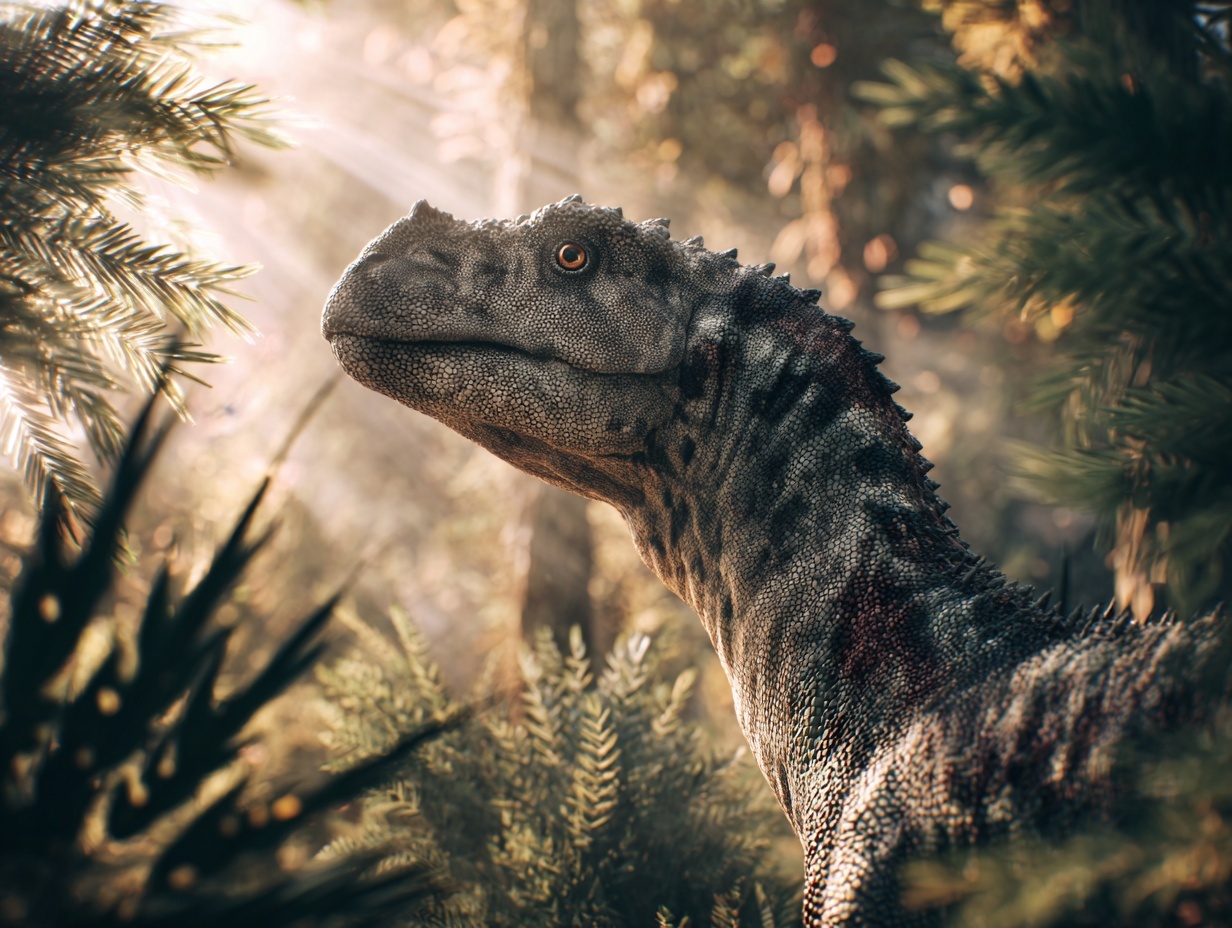
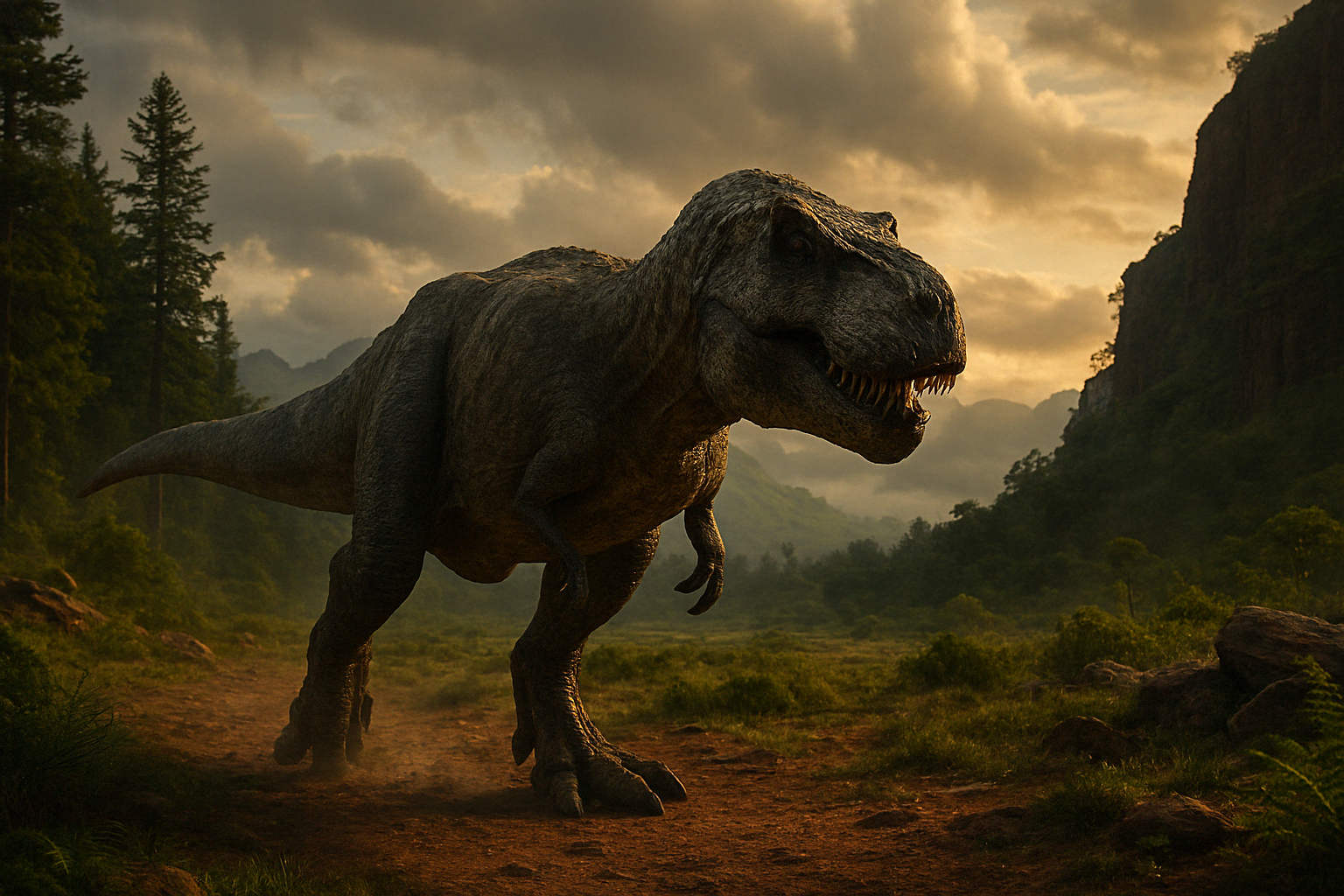
These are the six shots I keep coming back to. Look at the jaws first, then the arms, then the hips and tail. That is where the T. rex story lives.
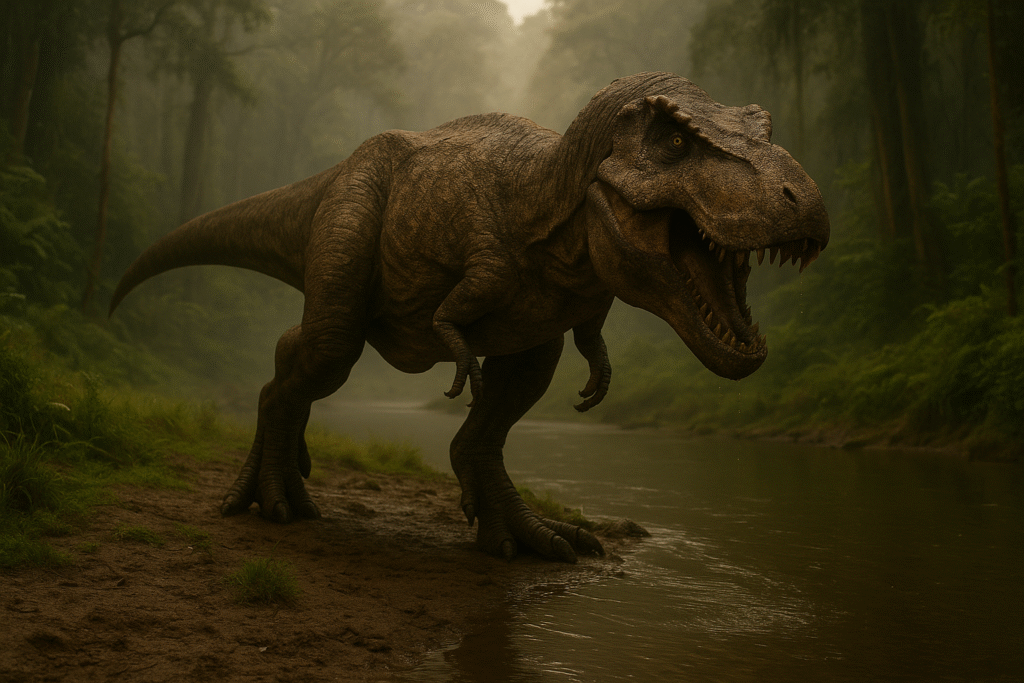
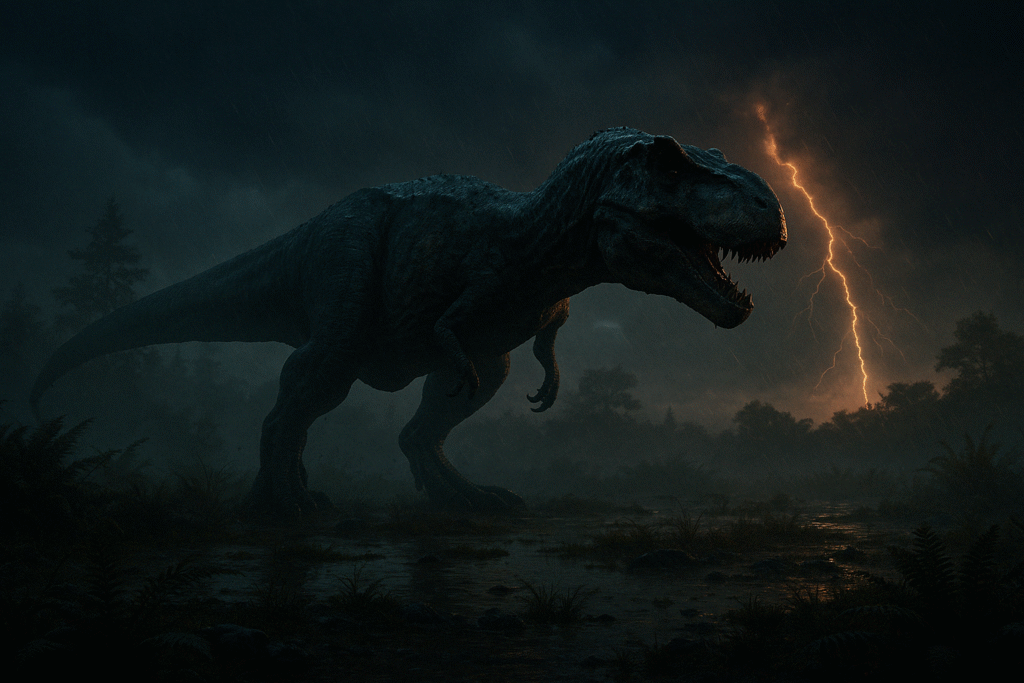
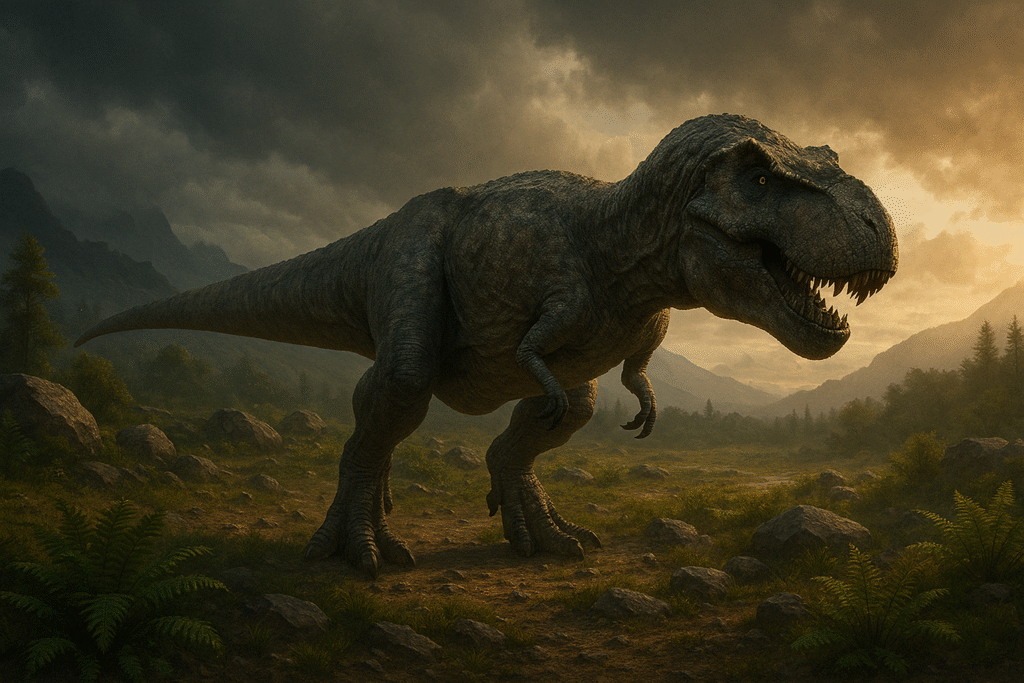
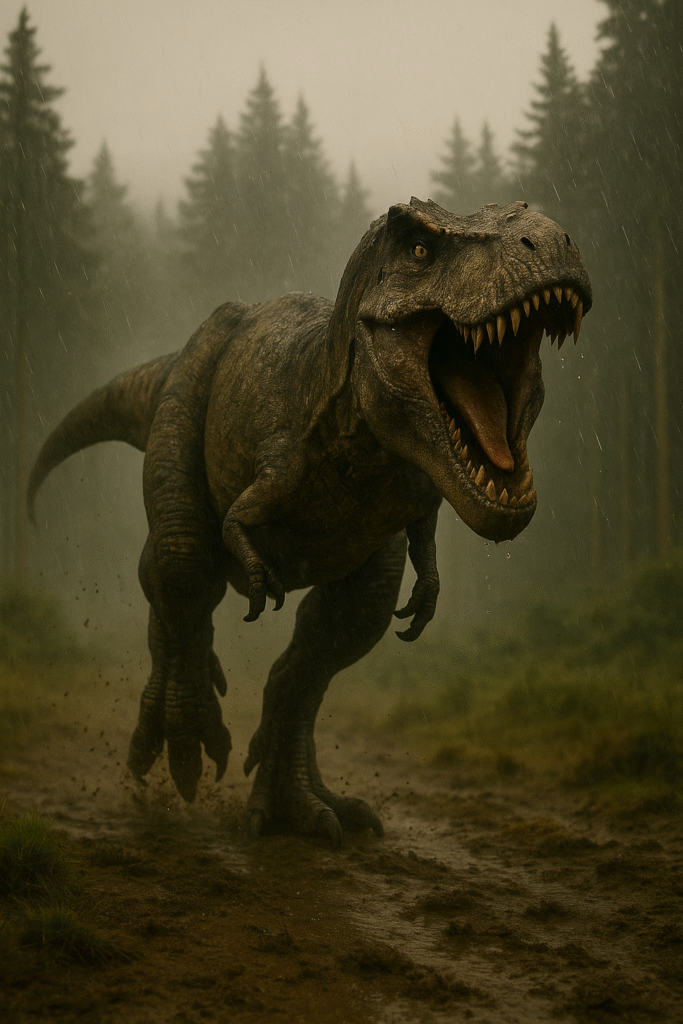
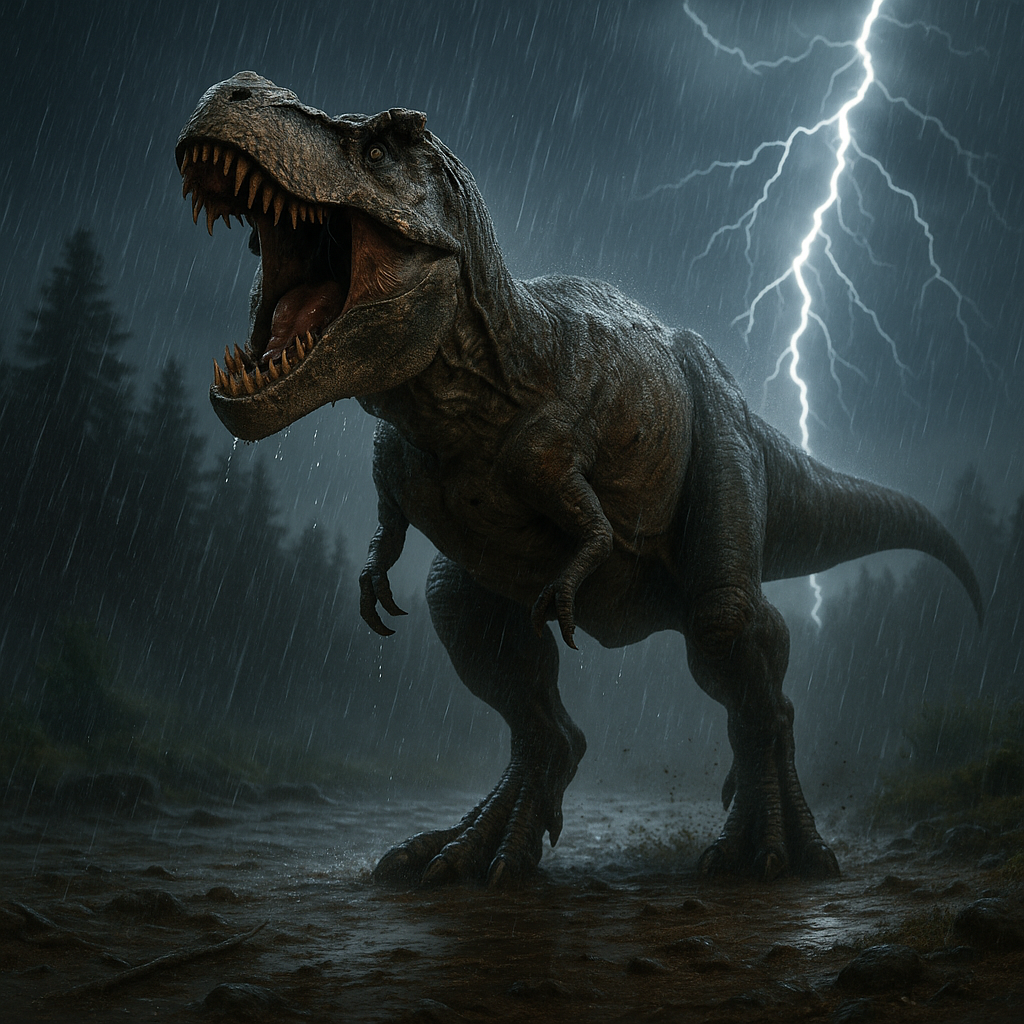
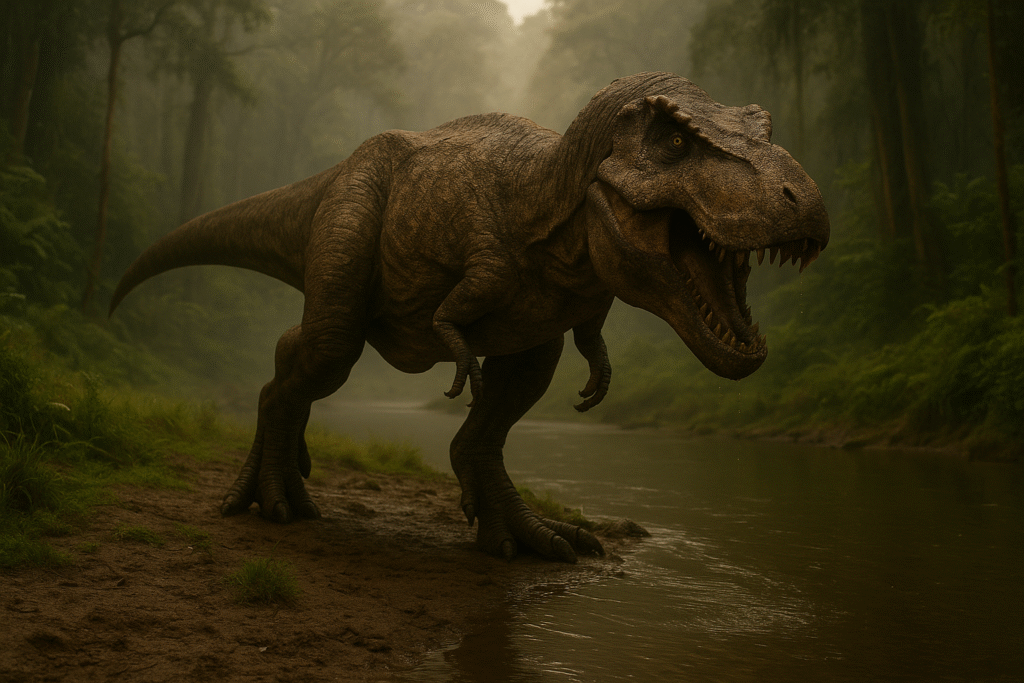
Day 1: Staring Down the King.
Okay, so here’s the thing about photographing a T-Rex: it’s terrifying. Imagine crouching behind a bush, holding your breath, while the King of Dinosaurs stomps past you, close enough that you can feel the ground shake. That’s what I did—twice—because the first picture didn’t focus right. Turns out, iPhones don’t come with “prehistoric wildlife” mode.
I wasn’t just there for fun, though. This was a real mission. Scientists in my time can’t agree on whether T-Rexes were more like lizards or giant, feathery birds, and my goal was to get photographic evidence to settle the debate once and for all. Easy, right? Except that a certain rival scientist—I’m looking at you, Dr. Kline—doesn’t want the truth to come out. He’s been trying to discredit me since my first find. Something about “a middle schooler shouldn’t rewrite paleontology textbooks.” Rude.
Sam, my older sister, thinks the whole thing is ridiculous. “If you’re risking your life,” she said, “at least sell the pictures to National Geographic or something. Imagine the cash!” Classic Sam. She’s all about the practical stuff. Me? I just want to win the science fair, prove T-Rexes were cooler than anyone thinks, and maybe—just maybe—get Heather (she’s in my biology class) to notice me.
Max’s Encounter: A Photo Mission Gone Wrong
The first T-Rex I photographed was standing over a Triceratops carcass, tearing it apart like it was no big deal. I thought I was safe, hiding in a tree and using my camera’s zoom. But then the wind shifted. Remember how I said T-Rexes had amazing noses? Yeah, it turned its massive head right toward me, sniffed the air, and let out this bone-rattling roar.
I didn’t even think—I just bolted. Let me tell you, running from a T-Rex is like running from a freight train. You don’t stop to look back. Somehow, I managed to dive into a ravine and lose it. Later, I realized I still had my phone in my hand and—miracle of miracles—the picture was crystal clear. Mission accomplished… sort of.
T-Rex’s Best Features
- Bone-Crushing Jaws
T-Rex had powerful jaws capable of crushing bone. The Natural History Museum describes its anatomy and behavior. - Incredible Nose
T-Rex had a well-developed sense of smell, though the exact distance at which it could detect food is uncertain. - Surprising Speed
Researchers estimate its speed using models; a precise maximum is uncertain and may have varied with age. - Tiny but Mighty Arms
Their exact use remains debated. The Natural History Museum discusses the evidence.
Did You Know?
- T-Rex teeth weren’t just sharp—they were serrated like steak knives, perfect for tearing through tough prey.
- Some scientists think T-Rexes scavenged as much as they hunted. Why waste energy chasing dinner when you can find leftovers?
- The feather debate isn’t settled yet! While T-Rex juveniles might have been fluffy, adults were probably scaly giants.
Max’s Field Notes
- Survival Tip: Never assume a T-Rex is too full to chase you.
- Best Shot: The photo I got of a T-Rex mid-roar is going straight into my science fair project—if Dr. Kline doesn’t sabotage me first.
- What I Learned: The T-Rex isn’t just the King of Dinosaurs; it’s the ultimate survival machine.
Real Dinosaur Pictures
Snapping pictures of a T-Rex isn’t exactly like photographing your dog. Sometimes you have to hide for hours, covered in mud, waiting for the perfect moment. But the results? Totally worth it. Check out this shot I got just before the T-Rex spotted me—it’s almost like it’s looking right into the camera.
If you want the size argument settled, here is T. rex vs. Spinosaurus. Put those numbers next to other giants in this dinosaur size comparison. For the movie version, check how accurate the Jurassic Park dinosaurs were.
The Bigger Mission
Time’s running out—literally. The comet that ended the dinosaurs is looming closer, and I need to gather as much evidence as possible before everything goes up in smoke. Between rival scientists trying to stop me, dodging prehistoric predators, and convincing Sam not to sell my pictures for quick cash, it’s been… a lot. But if I can prove the truth about dinosaurs—especially this bird vs. lizard debate—I’ll have done something no one else could.
Want to see what’s next? Follow me as I face off against the cunning Velociraptors, the smartest (and scariest) predators of their time. Spoiler alert: it involves a nest, some stolen eggs, and way too much running. 🦖
More Dinosaur Field Guides
- Tyrannosaurus Rex Facts and Pictures for Kids and Dino Nerds
- Dinosaur Names and Pictures: A Big Starter Guide for Curious Kids and Dino Nerds
- Maiasaura – The Dinosaur Known for Its Excellent Parenting Skills
- Types of Dinosaurs (With the Famous Ones You Actually Search For)
- Types of Dinosaurs (Explained Like You’re on a Field Trip with Max, Jake & Sam)