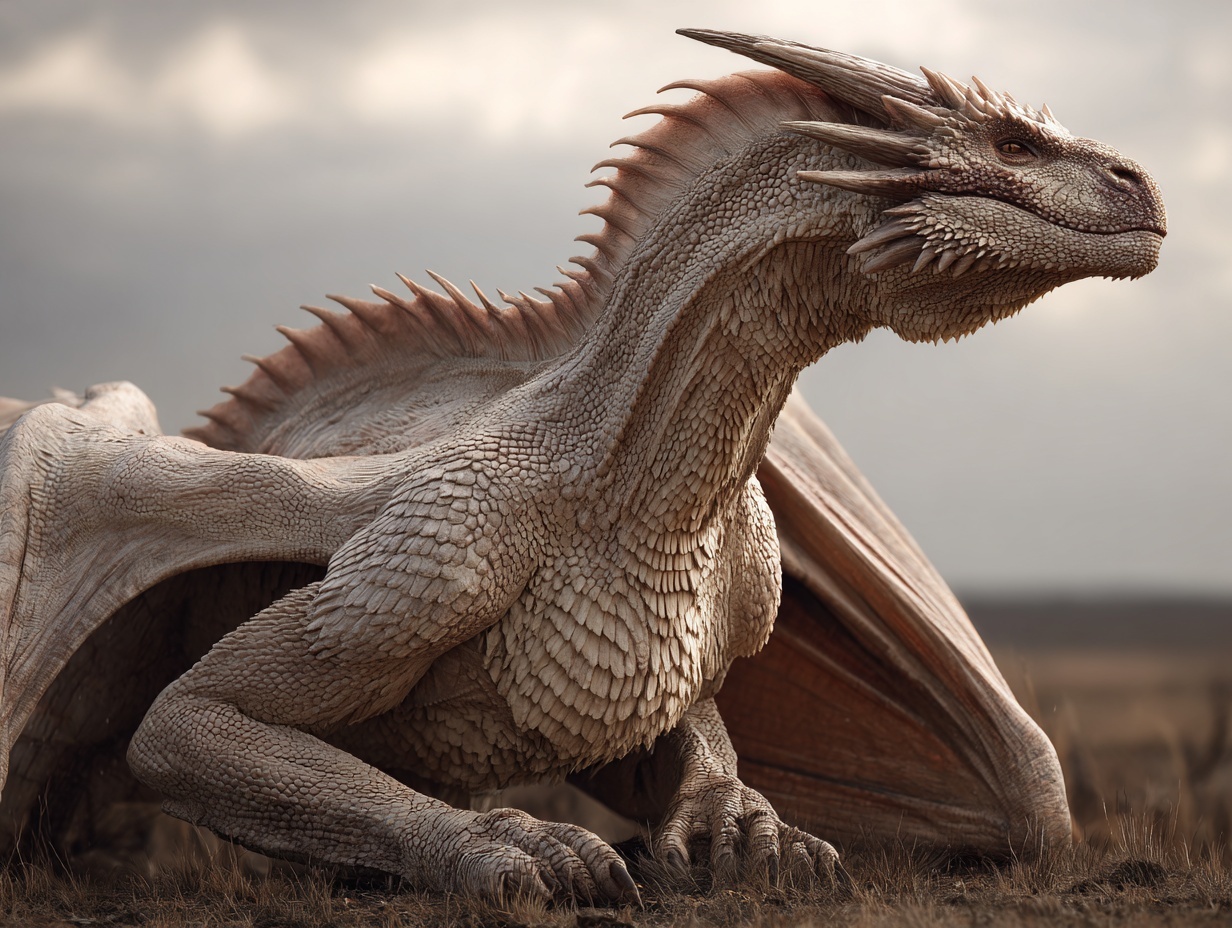
Short version: the real Velociraptor was a feathered meat-eater about 6 to 7 feet long and around 30 pounds, smaller than the movie raptors. Whether it hunted in packs is unconfirmed; the Natural History Museum says there is no current evidence for it. Max’s pack encounter below is imagined.
Day 2: An Imagined Raptor Encounter.
If you think Velociraptors are just overhyped movie monsters, let me stop you right there. These guys weren’t just smart—they were terrifyingly smart. Imagine a creature that can hunt in packs, figure out your weaknesses, and sprint faster than your average human. Now imagine being me, hiding in a cluster of bushes, trying to not sound like lunch. Welcome to Day 2 of my time-traveling adventure.
Quick Facts About Velociraptors
Here’s what I learned about these clever killers:
- Name Meaning: Velociraptor means “swift thief,” which is both cool and accurate.
- Time Period: They lived about 75–71 million years ago during the Late Cretaceous period.
- Size: About 6–7 feet long and 2 feet tall at the hips—not Jurassic Park-sized, but that didn’t make them any less dangerous.
- Weight: Around 30 pounds—basically, a terrifying prehistoric turkey.
- Diet: Carnivorous. Cooperative hunting is unconfirmed; the Natural History Museum says there is no current evidence for it in Velociraptor.
- Habitat: Deserts of what is now Central Asia (like Mongolia).
Real Velociraptor vs the Movie Raptor
| Real Velociraptor | Movie raptor | |
|---|---|---|
| Size | About 6 to 7 feet long, 2 feet tall at the hips, around 30 pounds | Bigger than the real animal |
| Name and model | Velociraptor means swift thief | Modeled on Deinonychus, a much larger relative |
For the larger relative behind the movie raptors, read the Deinonychus field guide.
Max’s Encounter: Pack Mentality
In this imagined encounter, the Velociraptors hunt together. I learned this the hard way while trying to snap a picture of one that was digging around in the sand. (Yes, digging! Paleontologists think raptors may have used their claws to scavenge or uncover food.)
I was crouched low, camera ready, when I noticed something moving out of the corner of my eye. Then another. And another. It turns out I wasn’t watching one Velociraptor—I was surrounded by a pack.
I stayed as still as possible, barely breathing. In this imagined encounter, the curved claw looks fearsome. Its real use is still investigated; it may have helped grip and pin prey.
Somehow, I managed to snap a picture (blurry, but hey, it’s proof) before one of them got too curious and started sniffing toward my hiding spot. Long story short? I’m fast. Raptors are faster. But I found a fallen log to dive under just in time. Survival tip: Always have an exit strategy when you’re dealing with pack hunters.

The Famous Velociraptor Claw
Velociraptor had a curved sickle claw on each foot. The Natural History Museum describes gripping and pinning prey as a likely use, rather than the movie-style slashing kick.
Did You Know?
- Velociraptors weren’t as big as the ones in Jurassic Park—those were actually modeled after Deinonychus, a much larger relative.
- Fossils show that Velociraptors had feathers. So yes, you could think of them as vicious prehistoric birds.
- Velociraptor had sharp teeth and claws. Its precise intelligence cannot be established from brain size alone.
Real Velociraptor Pictures You’ll just have to trust me on this one—I’ve got the scratches to prove how close I got. My photo shows a Velociraptor digging in the sand, its feathers ruffling in the breeze. It’s not a perfect shot (holding steady while terrified is harder than it looks), but it’s enough to capture the sharp curve of its claws and the eerie intelligence in its eyes.


Field Notes From Max
- Survival Tip: Never underestimate a Velociraptor. Where there’s one, there are probably more.
- What I Learned: Intelligence makes them far more dangerous than size alone.
- Favorite Moment: Watching a raptor tilt its head at me, like it was deciding whether I was worth the trouble.
The Bigger Picture
This wasn’t just about getting a cool photo (though that’s part of it). I needed proof that Velociraptors had feathers to help settle the ongoing debate about dinosaurs evolving into birds. If I can show the world what these creatures really looked like, it might change everything. Unfortunately, not everyone wants that truth out there, especially people like Dr. Kline, who’s convinced I’m just a “kid with Photoshop.” Guess I’ll just have to keep proving him wrong.
More Dinosaur Field Guides
- Tyrannosaurus Rex Facts and Pictures for Kids and Dino Nerds
- Dinosaur Names and Pictures: A Big Starter Guide for Curious Kids and Dino Nerds
- Maiasaura – The Dinosaur Known for Its Excellent Parenting Skills
- Types of Dinosaurs (With the Famous Ones You Actually Search For)
- Types of Dinosaurs (Explained Like You’re on a Field Trip with Max, Jake & Sam)