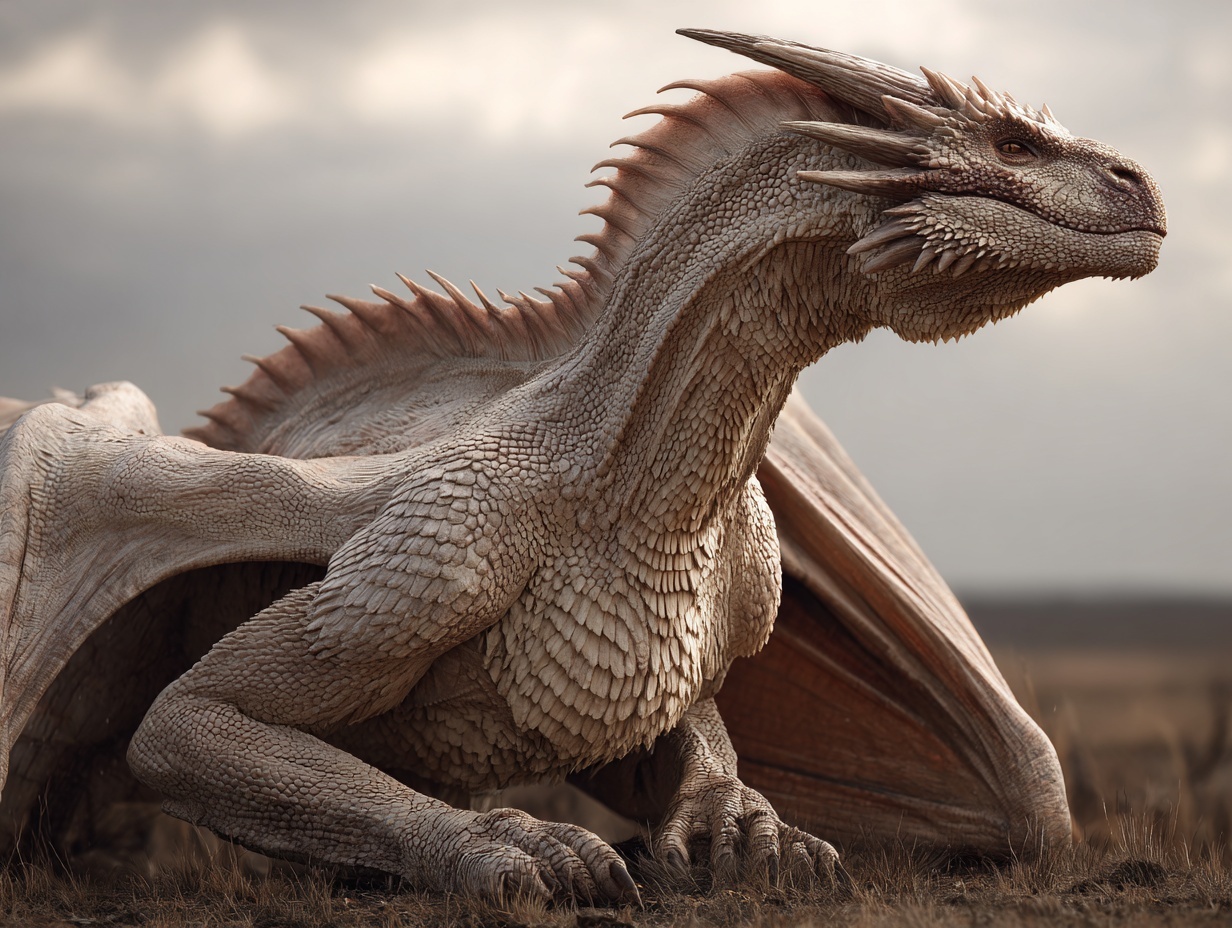
Day 20: When you’re wandering the prehistoric world, it’s easy to forget to look up. That’s a mistake I’ll never make again after encountering a Pteranodon—a flying reptile with a wingspan so massive it could blot out the sun. These creatures ruled the skies, and when you’re standing below one, you realize just how small and grounded you really are.
Story note: Max’s encounter and photographs are imagined; the factual notes draw on fossil research.
Quick answer for picture hunters: Pteranodon was a flying reptile called a pterosaur, and it was not a dinosaur. The gallery below has six Pteranodon pictures. If the pterodactyl and pterosaur mix-up is what brought you here, the pterodactyl versus pterosaur pictures sort it out.
Quick Facts About Pteranodon
Here’s what makes this flying giant so incredible:
- Name Meaning: Pteranodon means “toothless wing,” named for its beak-like mouth.
- Time Period: Lived about 86–84 million years ago during the Late Cretaceous.
- Size: The American Museum of Natural History describes Pteranodon longiceps with a wingspan of up to about 20 feet (6 metres).
- Diet: Primarily fish, but it may have also scavenged or hunted smaller prey.
- Habitat: Coastal regions and open skies in what is now North America.
Max’s Encounter: Too Close for Comfort
I was near a cliff overlooking the ocean, snapping pictures of the waves when I noticed a shadow moving across the water. At first, I thought it was a cloud. Then I looked up.
A Pteranodon was circling above, its wings outstretched like a glider. It dove toward the water, snapping up a fish with its long, pointed beak, and then rose back into the air with barely a flap of its wings.
I stood there, awestruck, until I realized it was circling lower. I froze as it swooped closer, its wings creating a rush of wind that nearly knocked me over. For a moment, it hovered, its massive beak aimed in my direction, before letting out a high-pitched cry and gliding back out to sea. I didn’t know whether to feel relieved or disappointed that it didn’t stick around.
Why Was Pteranodon So Successful?
- Efficient Flight
Pteranodon had a lightweight build adapted for flight. - Specialized Beak
Its long, toothless beak and fish-associated fossils offer clues to its diet; the exact way it caught prey remains a question. - Adaptability
Pteranodon lived near an ancient seaway; fish formed part of its diet, though individual feeding behavior is not directly observed.
Did You Know?
- Pteranodon wasn’t a dinosaur—it was a pterosaur, a group of flying reptiles.
- Its wings were made of skin, muscle, and fibers stretched over an elongated fourth finger.
- Pteranodon fossils show variation in size and crest shape. Interpretations of sex and crest function remain hypotheses.
Imagining Pteranodon Pictures
The photo I managed to snap shows the Pteranodon mid-glide, its shadow stretching across the ocean below. Sam said it looks like something from a nature documentary. I told her it felt like being in one—except with a much higher chance of getting dive-bombed.
In the gallery: Pteranodon over a forested river canyon at sunrise, low over rough sea waves under storm clouds, over ocean waves at sunset, and in close-ups of its long beak and tall head crest.


Field Notes From Max
- Survival Tip: Always look up. Pteranodon might not attack you, but its wings can create enough wind to knock you flat.
- What I Learned: Flight gave Pteranodon access to food and safety, making it one of the most successful creatures of its time.
- Favorite Moment: Watching it dive for fish with the precision of an Olympic diver.
The Bigger Picture
Pteranodon was a flying pterosaur, not a dinosaur or an ancestor of modern birds. Both groups show different paths to flight.
Back home, people still confuse pterosaurs with dinosaurs, but my imagined photo cannot serve as fossil evidence. Meanwhile, Sam thinks I should write a “Flying Reptiles vs. Birds” article. “People love a good rivalry,” she said. Not wrong.
Next up: Day 21: Spinosaurus Revisited – Predator or Fisherman?
We’ve seen Spinosaurus in action before, but what’s the truth about this aquatic predator? Stay tuned for a deeper dive into its hunting strategies—and how I almost became part of the food chain.
More Dinosaur Field Guides
- Tyrannosaurus Rex Facts and Pictures for Kids and Dino Nerds
- Dinosaur Names and Pictures: A Big Starter Guide for Curious Kids and Dino Nerds
- Maiasaura – The Dinosaur Known for Its Excellent Parenting Skills
- Types of Dinosaurs (With the Famous Ones You Actually Search For)
- Types of Dinosaurs (Explained Like You’re on a Field Trip with Max, Jake & Sam)