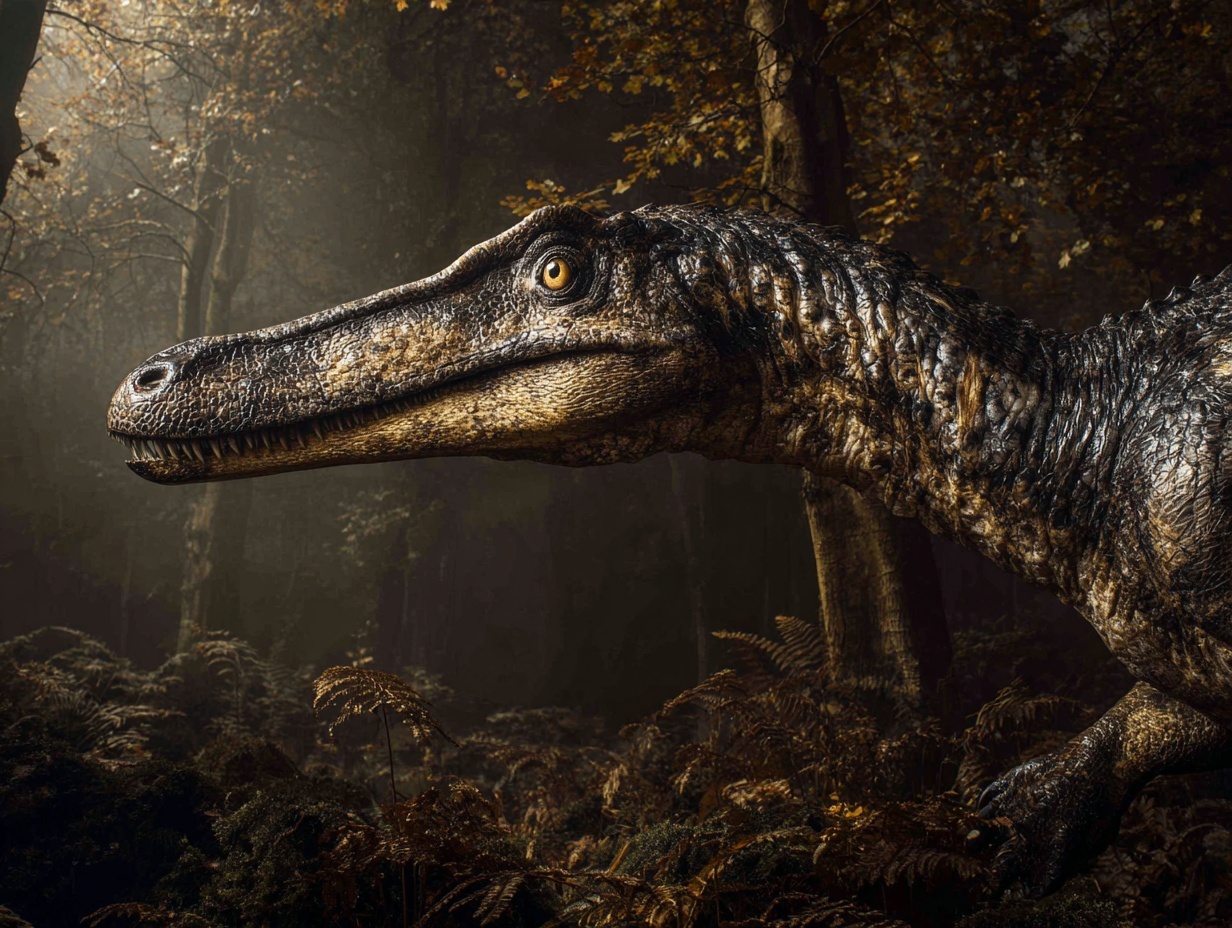
(Or, “How I Set Out to Change the Way the World Sees Dinosaurs”)
Were dinosaurs smart? Fossils offer clues about behavior, but brain size alone cannot settle how intelligent a dinosaur was. Short version: some dinosaurs were likely cleverer than the old “dumb lizard” image, and the evidence is clues, not proof. Max’s quest below is fiction: the camera project, raptor experiments, conversations, and field notes are imagined. Fun? Yes. Proof of dinosaur smarts? No.
What We Actually Know (The Short Answer)
- Brain size alone is not a smartness score. A big brain on a huge body does not automatically mean high intelligence, and a small brain does not rule it out.
- Birds are living dinosaurs. Comparing dinosaurs with birds gives us the best living clues we have.
- Behavior is debated. Herds, packs and possible social coordination are argued from fossils, and scientists do not all agree.
- Max’s experiments below are fiction. They are a fun way to explore the question, not evidence.
“Max,” Jake said one afternoon, flipping through a dino book, “how do we know dinosaurs were as smart as people say? I mean, I get that they were cool and all, but could they actually outsmart us?”
I closed my laptop and looked up, suddenly intrigued by Jake’s question, remembering my Spinosaurus fishing trip. “Well, Jake,” I said, “that’s actually the big mystery. For years, scientists thought that dinosaurs, especially the big ones like T-Rex, were just brute-force creatures—dumb animals who relied on their size and power. But that’s not the whole story.”
“Wait,” Sam said, looking over. “You’re telling me that some dinosaurs were smarter than we thought?”
“Exactly,” I said, “and I’ve got a mission to prove it.”
The Old Idea: Dumb Dinosaurs?
For most of the 20th century, dinosaurs were seen as big, slow, and not all that bright. T-Rex was the king of the carnivores, but its tiny arms and massive head made people think it wasn’t all that clever. Herbivores were seen as less intelligent too, just wandering around munching plants without any real purpose.
But over the years, paleontologists started uncovering evidence that some dinosaurs were way more intelligent than we gave them credit for.
Dinosaur Intelligence: Clues, Not Proof
I started looking into the latest research, which revealed some amazing facts about dinosaur intelligence. Some species were more than just giant lizards—they were actually thinking creatures capable of problem-solving, strategy, and social behavior.
1. The Raptors—Not Just Big Birds
Movies portray raptors as expert problem-solvers, but that portrayal cannot establish the intelligence of real Velociraptor. Fossils and comparisons with living animals provide clues with limits.
Brain size alone cannot tell us exactly how intelligent Velociraptor was. Cooperative hunting in Max’s account is imagined; there is no current evidence for it, according to the Natural History Museum. Our Velociraptor field notes look at the pack-hunting question in more detail.
2. The Discovery of Evidence for Social Behavior
While some dinosaurs were solitary, others—like Triceratops—were social creatures. Evidence shows that some herbivores traveled in herds, while predators like Allosaurus may have hunted in packs. That’s a pretty sophisticated level of coordination. But what about the big guys—the plant-eating giants?
3. The Mystery of the Sauropods
Sauropod fossils can offer clues to their lives, but claims about complex social systems or long-distance calls require specific evidence. Brain size alone does not establish those behaviors.
What dinosaurs still exist today follows the bird line all the way to your garden.
My Quest: What I Went Looking For
So, I had all this cool evidence, but I needed something more: proof. I couldn’t just take paleontologists’ word for it. I needed to show the world how dinosaurs were not just brute force but brainy, calculating, and clever.
1. The Dino Camera Project
I knew the best way to do this was to document it—get photos of these “smart” dinosaurs doing their thing. I spent days observing the behavior of herbivores, carnivores, and even the tiniest raptors. I’d use my camera to snap shots of their interactions, movements, and even moments of strategy in the wild.
2. The “Raptor Tactics” Test
One of the most thrilling experiments I tried was testing the hunting strategies of raptors. Armed with photos, I started analyzing their tactics. From the way they communicated with each other to their use of the environment, raptors were basically the Navy SEALs of the dinosaur world. I compared their hunting methods to modern predators—like wolves—and found they used a similar strategy: divide and conquer.
3. The Herbivore Intelligence Test
In the imagined encounter, a Triceratops herd appears to protect its young. That scene is fiction and does not establish the behavior of real animals.
Jake’s Take on the Smart Dinosaur Theory
“So you’re telling me that raptors and herbivores were way smarter than I thought?” Jake asked, clearly intrigued.
I nodded. “Yeah. And it’s not just about their brains. It’s about their behavior, their social systems, and how they interacted with their environment. These dinosaurs weren’t just living to survive—they were thinking about how to survive. They were learning.”
Jake looked at the photos I had taken. “That’s crazy. I always thought dinosaurs were just ‘big lizards’ who ate stuff. But now they’re like… ancient problem-solvers?”
“Exactly,” I said. “And I’m on a mission to show the world just how smart they really were.”
Sam’s Insight
“You know, I always thought of dinosaurs as these cool but pretty basic creatures,” Sam said, flipping through my field notes. “But when you actually look at their behavior—like how raptors probably communicated or how Triceratops protected their young—it’s clear they weren’t just mindless eating machines.”
“Right?” I said, grinning. “They were basically the ancient predecessors of some of the smartest animals we know today.”
Field Notes From Max
- Biggest Surprise: Realizing just how much intelligence dinosaurs really had—especially the raptors and social herbivores.
- Coolest Discovery: Watching a Velociraptor in action and realizing they were tactical, like a modern predator.
- What’s Next: I’m planning to continue documenting their behavior—maybe even get a picture of a T-Rex outsmarting its prey. Let’s see how smart they really are.
Dinosaurs are fascinating animals to study. Fossils can inform hypotheses about behavior, but these imagined encounters are not direct evidence of their intelligence or social strategies. 🦖💡✨
Related Dino Facts
- Tyrannosaurus Rex Facts and Pictures for Kids and Dino Nerds
- Dinosaur Names and Pictures: A Big Starter Guide for Curious Kids and Dino Nerds
- Types of Dinosaurs (With the Famous Ones You Actually Search For)
- Maiasaura – The Dinosaur Known for Its Excellent Parenting Skills
- Homeward Pause – Recapping the Chaos and Plotting What’s Next